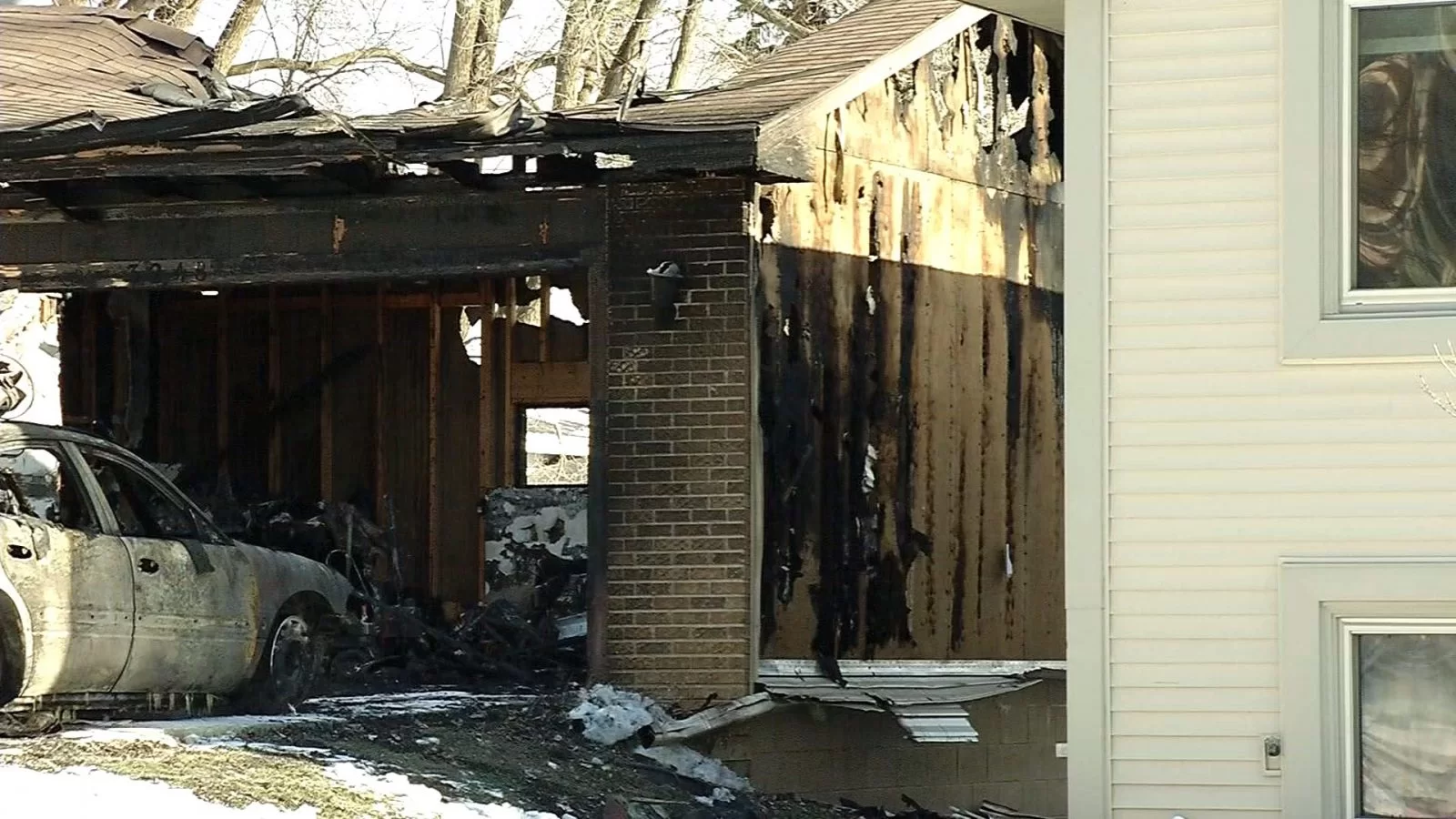
While EV fires are statistically rarer than gas car fires in 2026, they are significantly more intense due to Thermal Runaway—a chemical chain reaction that is notoriously difficult to extinguish. This has led to a “tangled web” of liability between your auto and homeowners insurance.
Who Pays for the House?
- The Origination Rule: In 2026, if the fire starts in the car’s battery, your Auto Insurance (specifically the Liability portion) is technically responsible for the damage to your garage and home.
- The “Thermal” Surcharge: Because a thermal runaway event can burn at $2,700^{\circ}\text{F}$($1,500^{\circ}\text{C}$), damaging structural steel and concrete, insurers are now offering EV Fire Liability Riders. For a small annual fee, these increase your property damage liability specifically for fire-related events.
- The DIY Charger Exclusion: If a fire is traced back to an unpermitted, DIY “Level 2” charger installation, your 2026 homeowners insurer may deny the claim and subrogate the loss against you personally for negligence.
